
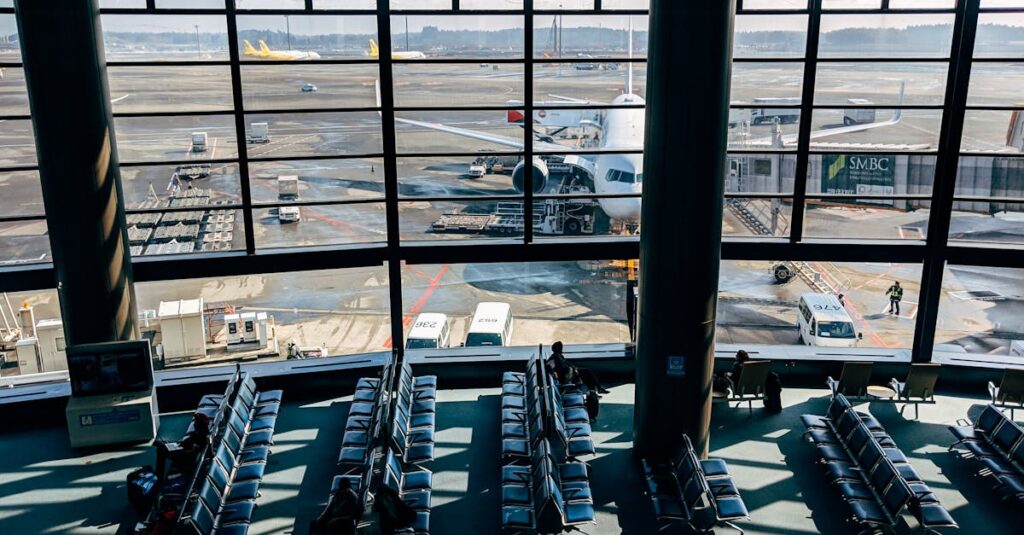
Being offloaded in the Philippines can be financially devastating and emotionally distressing, especially when a traveler already has a valid passport, visa, confirmed hotel bookings, and airline tickets. Every year, the Bureau of Immigration prevents thousands of passengers from boarding international flights due to suspected immigration violations, trafficking indicators, documentary inconsistencies, or travel-related concerns.
But while the Philippine government, through the Bureau of Immigration (“BI”), has authority to regulate departures for lawful purposes such as anti-human trafficking enforcement and immigration control, that authority is not unlimited. The constitutional right to travel remains protected, and any restriction must be grounded on law, due process, and legitimate governmental objectives.
This 2026 legal guide explains:
- what “offloading” legally means;
- the constitutional and statutory basis for travel restrictions;
- the most common reasons travelers are stopped;
- what rights passengers have during immigration inspection;
- available administrative and judicial remedies; and
- how to avoid repeated offloading incidents.
What Does “Offloading” Mean Under Philippine Law?
“Offloading” is the informal term used when a traveler is denied clearance to depart by immigration authorities at the airport, usually during primary or secondary inspection.
Contrary to public misconception:
- offloading is not automatically a criminal accusation;
- it is not necessarily a “travel ban”; and
- it does not, by itself, mean a person committed fraud or illegal recruitment.
Rather, it is an administrative immigration action taken before departure when immigration officers believe the traveler failed to satisfy departure clearance requirements or falls within categories requiring further restriction or verification.
Typical grounds include:
- suspected fraudulent or inconsistent travel documents;
- possible illegal recruitment or human trafficking indicators;
- questionable travel purpose;
- unresolved watchlist or hold-departure issues; or
- mismatched statements during immigration interview.
The Constitutional Right to Travel
The right to travel is expressly recognized under Section 6, Article III of the 1987 Philippine Constitution:
“The liberty of abode and of changing the same within the limits prescribed by law shall not be impaired except upon lawful order of the court. Neither shall the right to travel be impaired except in the interest of national security, public safety, or public health, as may be provided by law.”
1987 Philippine Constitution
However, the right is not absolute.
The Philippine Supreme Court has repeatedly held that constitutional liberties may be subject to reasonable regulation when justified by lawful state interests.
In Marcos v. Manglapus, G.R. No. 88211 September 15, 1989, the Supreme Court recognized that the right to travel may be limited under exceptional circumstances involving national welfare and governmental authority.
Similarly, in Silverio v. Court of Appeals, G.R. No. 94284 April 8, 1991, the Court emphasized that restrictions may exist when authorized by law and supported by compelling governmental interest.
Legal Basis Used by Immigration Authorities
The Bureau of Immigration primarily derives its authority from:
- the Philippine Immigration Act of 1940;
- anti-human trafficking laws;
- immigration administrative issuances; and
- airport border control regulations.
A major operational justification for offloading practices comes from the State’s anti-trafficking mandate under the:
- Anti-Trafficking in Persons Act of 2003, as amended by
- Expanded Anti-Trafficking in Persons Act of 2012.
These laws require government agencies to prevent trafficking schemes often disguised as tourist travel, sham sponsorships, or undocumented overseas employment arrangements.
As a result, immigration officers are trained to identify “red flags” associated with trafficking or illegal recruitment.
Why Travelers Get Offloaded in the Philippines
1. Suspicion of Illegal Overseas Employment
One of the most frequent causes is when immigration officers suspect that a traveler claiming to be a tourist is actually leaving for work abroad without proper processing.
Common triggers include:
- inconsistent employment history;
- absence of local ties;
- messages or contracts suggesting overseas work;
- lack of financial capacity for tourism; or
- admission that another person financed the trip without clear explanation.
In practice, immigration officers often look for evidence that the traveler circumvented proper overseas employment procedures under Philippine labor and migrant-worker laws.
2. Human Trafficking Indicators
The government aggressively monitors trafficking indicators, particularly involving:
- young first-time travelers;
- undocumented sponsors;
- vague itineraries;
- inconsistent relationship claims;
- suspicious recruiters; or
- group travel arrangements linked to trafficking profiles.
Under Philippine law, trafficking prevention is treated as a matter of public policy and national protection.
3. Inconsistent Statements During Interview
A surprisingly common reason for secondary inspection is inconsistency between:
- the traveler’s verbal answers;
- hotel bookings;
- itinerary;
- bank records; or
- visa documentation.
Examples include:
- inability to explain travel funding;
- contradictory hotel details;
- conflicting travel dates;
- uncertainty regarding host identity abroad; or
- inconsistent purpose of travel.
4. Watchlist Orders or Court Restrictions
Some passengers are denied departure because of:
- Hold Departure Orders (HDOs);
- Watchlist Orders;
- warrants of arrest;
- pending criminal cases with travel restrictions; or
- immigration derogatory records.
Unlike ordinary “offloading,” these are usually anchored on court or law-enforcement databases.
What Rights Does a Traveler Have During Immigration Inspection?
Even during secondary inspection, passengers retain legal rights.
These include:
Right Against Arbitrary Treatment
Immigration officers cannot legally act purely on whim, personal bias, or humiliating assumptions.
Administrative discretion must still comply with:
- due process;
- equal protection;
- lawful procedure; and
- constitutional limitations.
Right to Know the Basis of the Restriction
A traveler should attempt to secure:
- the stated reason for denial;
- officer names;
- inspection details; and
- any notation or record made on the passport or travel documents.
This documentation becomes important if legal remedies later become necessary.
Right to Dignity and Humane Treatment
Government officers remain bound by:
- the Constitution;
- the Code of Conduct and Ethical Standards for Public Officials and Employees; and
- administrative accountability rules.
Humiliating, abusive, discriminatory, or extortionary conduct may expose officers to administrative or criminal liability.
What To Do Immediately After Being Offloaded
1. Document Everything
Prepare a written timeline while events remain fresh.
Record:
- exact questions asked;
- your answers;
- officer identities;
- terminal location;
- time of inspection; and
- any documents examined or retained.
2. Preserve Supporting Documents
Keep copies of:
- boarding passes;
- hotel reservations;
- employment documents;
- screenshots of communications;
- bank certificates; and
- travel itineraries.
These may later prove consistency and legitimacy of travel.
3. Avoid Confrontation at the Airport
Aggressive confrontation rarely helps and may escalate the situation.
Instead:
- remain calm;
- ask respectful clarificatory questions; and
- focus on securing documentary evidence of what occurred.
Legal Remedies After Being Offloaded in the Philippines
Administrative Reconsideration
In many cases, the most practical remedy is correcting documentary deficiencies and rebooking with stronger supporting evidence.
This may involve:
- improved travel documentation;
- better financial proof;
- clarified itinerary; or
- proper overseas employment processing.
Filing Administrative Complaints
If the conduct of immigration personnel was abusive, arbitrary, discriminatory, or unlawful, complaints may potentially be pursued before:
- the Bureau of Immigration;
- the Office of the Ombudsman; or
- other administrative oversight bodies.
Potential violations may involve:
- grave abuse of authority;
- misconduct;
- oppression; or
- violations of ethical standards.
Judicial Remedies
Court action is generally reserved for serious or repeated unlawful restrictions.
Possible remedies may include:
- petitions questioning unlawful restraint;
- injunctive relief;
- constitutional challenges; or
- damages in exceptional cases.
However, courts often expect exhaustion of administrative remedies unless immediate judicial intervention is necessary.
Important Labor Law Angle: Tourist Travel vs. Undocumented Work
Philippine authorities closely monitor attempts to disguise overseas work as tourist travel.
This intersects with labor law and anti-illegal recruitment policy.
Relevant labor regulations include:
which prohibit labor arrangements designed to circumvent worker protections and lawful deployment requirements.
Where immigration authorities believe a traveler is being deployed abroad outside proper channels, offloading risk substantially increases.
How to Avoid Getting Offloaded in the Philippines
A strong “travel credibility packet” should ideally include:
- passport and previous travel history;
- confirmed round-trip tickets;
- hotel bookings;
- employment certificate or business documents;
- leave approval;
- bank certificates or proof of funds;
- consistent itinerary;
- invitation letters (if applicable); and
- proof of relationship with hosts abroad where relevant.
Most importantly:
Your documents, timeline, and verbal answers must match.
Inconsistency is one of the largest practical triggers for secondary inspection.
Frequently Asked Questions (FAQs) About Offloading in the Philippines
Can immigration officers legally stop me from leaving the Philippines?
Yes, but only on lawful grounds authorized by immigration laws, anti-trafficking regulations, court orders, or other valid governmental authority.
Can I sue for wrongful offloading?
Potentially, yes. If the offloading was arbitrary, abusive, discriminatory, or unsupported by law, administrative and judicial remedies may be explored depending on the circumstances.
Is offloading the same as a travel ban?
No. Offloading is usually an administrative refusal of departure clearance during airport inspection. A travel ban or Hold Departure Order typically originates from courts or lawful government issuances.
Can first-time travelers be offloaded more easily?
First-time travelers sometimes receive additional scrutiny, particularly where immigration officers detect inconsistencies, trafficking indicators, or unclear travel purpose.
Final Legal Insight
Immigration control is a legitimate governmental function, especially in combating trafficking and illegal recruitment. But constitutional rights do not disappear at the airport.
An offloading decision must still be:
- lawful;
- reasonable;
- factually grounded; and
- consistent with due process principles.
Where restrictions become arbitrary, abusive, or unsupported by law, travelers may explore administrative and judicial remedies under Philippine law.
For travelers who have already experienced offloading, the most effective response is often a combination of:
- proper documentation,
- legal clarification of the underlying issue,
- strategic preparation before rebooking, and
- immediate preservation of evidence regarding the airport incident itself.
If you were recently offloaded in the Philippines, it is important to understand that immigration officers are still bound by constitutional limitations, administrative regulations, and due process requirements. Travelers offloaded in the Philippines may explore administrative or legal remedies depending on the circumstances of the denial of departure.
Related Articles:
- Hold Departure Order Philippines (2026): Complete Legal Guide for Criminal and Child Custody Cases
- Exclusion Order Philippines (2026): Complete Legal Guide to Denied Entry and Remedies
- Overstaying Philippines Penalty (2026): Complete Legal Guide to Fix an Overstay Visa
- Immigration in the Philippines (2026): A Practical Legal Guide for Foreign Nationals and Returning Filipinos
- Lift Blacklist Order Philippines (2026): Powerful Legal Guide to Remove BI Blacklisting
This article was prepared by Romualdez Law Offices, a Philippine law firm providing legal services in criminal law, family law, corporate law, immigration and dispute resolution.

This article is provided for general informational and legal educational purposes only and does not constitute formal legal advice. Immigration outcomes vary depending on the specific facts, documents, and applicable regulations involved.
Schedule a Consultation
Location
Soho 207 Mckinley Park Residences, 3rd ave. cor. 31st St., BGC, Taguig, Philippines, 1635
Email: executive@romualdezlaw.com
Contact Number: +63 952 489 1738