Best Evidence Rule in the Philippines: What Is It?
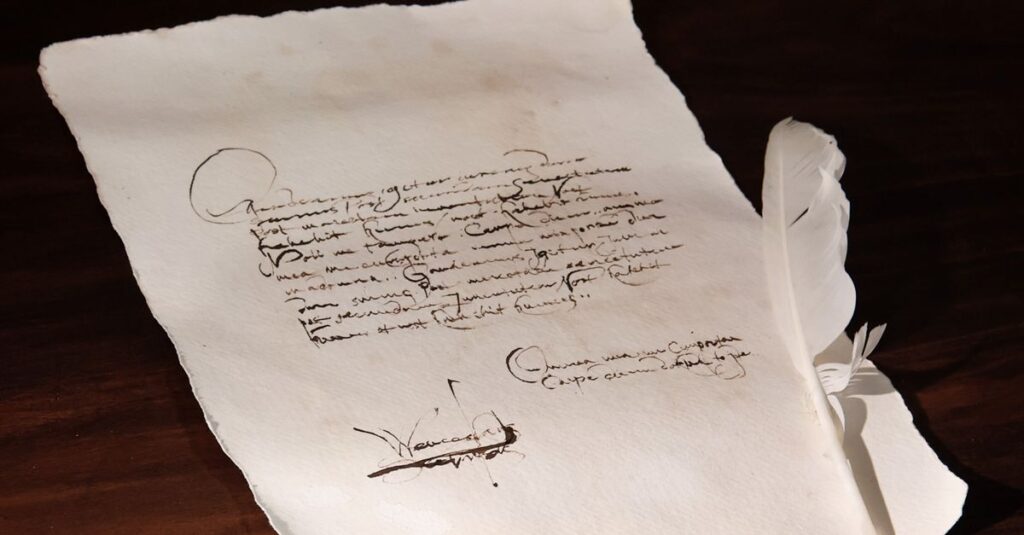
The Best Evidence Rule in the Philippines, now principally referred to as the Original Document Rule, requires the production of the original document when the contents of a document are the subject of inquiry.
Under Section 3, Rule 130 of the 2019 Revised Rules on Evidence, when the subject of inquiry is the contents of a document, writing, recording, photograph, or other record, no evidence is admissible other than the original, except in circumstances recognized by the Rules.
The rule is intended to prevent inaccuracies, alterations, and unreliable reproductions from being used to establish the contents of a document.
However, the Best Evidence Rule does not mean that an original document is required every time a document is mentioned in court. The crucial question is whether the contents of the document itself are being proved.
When Does the Best Evidence Rule Apply?
The Best Evidence Rule in the Philippines applies when the contents of a document are the subject of the inquiry.
For example, it may apply when a party seeks to prove:
- the exact terms of a contract;
- the contents of a written acknowledgment;
- entries appearing in a written instrument;
- the contents of a photograph or recording; or
- information contained in an electronic record.
The rule does not necessarily apply when the issue concerns the existence, execution, authenticity, or circumstances surrounding the execution of the document.
In Philippine Charity Sweepstakes Office v. Mendoza, G.R. No. 257849. March 13, 2023 the Supreme Court reiterated that the rule applies when the contents of the document are the subject of inquiry. If the issue instead concerns whether a document was executed or existed, testimonial evidence may be admissible without first producing the original.
Similarly, in Trillanes v. Medialdea,G.R. No. 241494, April 03, 2024, the Court explained that the rule applies when the terms of a written document are in issue, rather than automatically applying to disputes concerning external facts such as execution or existence.
What Is an Original Document Under Rule 130?
The 2019 Revised Rules on Evidence recognize several forms of originals.
Under Section 4, Rule 130:
- The original is the document whose contents are the subject of inquiry.
- If two or more copies were executed at or about the same time and contain identical contents, each may be regarded as an original.
- Certain repeated business entries may likewise be treated as originals when made in the regular course of business.
The rule is not limited to traditional paper documents. It also accommodates writings, recordings, photographs, electronic records, optical records, and similar means of recording information.
Is a Photocopy Admissible in Philippine Courts?
Yes, a photocopy may be admissible—but not automatically.
As a general rule, if the contents of a document are in issue, the original should be produced. A photocopy is secondary evidence and may be admitted when an applicable exception to the Original Document Rule has been established.
There is also an important procedural consideration: objection matters.
In People of the Philippines v. Lastimosa, G.R. No. 265758, February 03, 2025, the Supreme Court recognized that evidence not properly objected to may be considered by the court. Thus, a photocopy that could have been challenged under the Original Document Rule may nevertheless be considered when no timely and proper objection was made.
This does not mean that every photocopy is automatically admissible. It means that a party must properly invoke the applicable evidentiary objection when the opposing party offers secondary evidence.
Exceptions to the Best Evidence Rule in the Philippines
The Original Document Rule recognizes situations where secondary evidence may be presented.
1. The Original Document Was Lost or Destroyed
Secondary evidence may be admitted when the original has been lost or destroyed, or cannot be produced in court, provided the failure to produce the original was not caused by bad faith.
In De Leon, et al. v. The Manufacturers Life Insurance Company (Phils.) Inc., et al. G.R. No. 243733, January 12, 2021, the Supreme Court identified important requirements for presenting secondary evidence:
- existence or due execution of the original;
- loss, destruction, or nonproduction of the original; and
- absence of bad faith on the part of the party offering secondary evidence.
A party therefore should not simply state that the original document is unavailable. The circumstances surrounding its absence must be properly established.
2. The Original Is in the Opposing Party’s Custody
Secondary evidence may also be admitted when the original document is under the custody or control of the opposing party and that party fails to produce it after reasonable notice.
The proponent should generally establish:
- that the original exists;
- that it is in the opposing party’s possession or control;
- that reasonable notice was given for its production; and
- that the opposing party failed to produce it.
The 2019 Rules on Evidence recognize this circumstance as an exception to the Original Document Rule.
3. The Original Consists of Numerous Documents
Another exception applies when the original consists of numerous accounts or documents that cannot conveniently be examined in court without substantial loss of time.
If the fact to be established concerns only the general result of the entire collection, secondary evidence may be allowed.
This can be particularly relevant in disputes involving extensive business records, accounting materials, and voluminous transactions.
4. The Original Is a Public Record
The Original Document Rule also recognizes circumstances involving public records.
Where the original is a public record in the custody of a public officer or recorded in a public office, its contents may generally be proved through an official publication or an appropriately authenticated copy issued by the officer having legal custody of the record or the officer’s deputy.
5. The Original Is Not Closely Related to a Controlling Issue
The Original Document Rule does not apply where the original document is not closely related to a controlling issue in the case.
This prevents parties from invoking the rule over documents that are merely collateral and do not materially affect the determination of the dispute.
What Must Be Proved Before Secondary Evidence Is Admitted?
A party seeking to introduce secondary evidence should establish the factual foundation for the applicable exception.
Depending on the circumstances, this may require proof of:
- the existence or due execution of the original;
- why the original cannot be produced;
- the absence of bad faith;
- the custody or control of the original;
- reasonable notice for its production; and
- the reliability and relevance of the secondary evidence.
In De Leon, the Supreme Court upheld the admission of secondary evidence after the existence and execution of the originals were established and the circumstances surrounding their nonproduction were sufficiently shown.
Does the Best Evidence Rule Apply to Electronic Documents?
Yes.
The 2019 amendments to the Rules on Evidence were drafted broadly enough to encompass modern forms of recorded information.
The Original Document Rule refers to documents, writings, recordings, photographs, and other records, allowing it to operate in cases involving electronic and digital evidence.
This is particularly important in modern litigation involving:
- electronic contracts;
- digital records;
- photographs;
- audio recordings;
- electronic business records;
- computer-generated documents; and
- other electronically stored information.
The key question remains whether the contents of the electronic record are the subject of inquiry and whether the evidence being offered qualifies as an original or an admissible substitute.
Best Evidence Rule vs. Hearsay Rule
The Best Evidence Rule in the Philippines should not be confused with the hearsay rule.
They address different evidentiary problems:
| Rule | Main Concern | Question |
|---|---|---|
| Original Document Rule | Contents of documentary evidence | Is the original or an admissible substitute being presented? |
| Hearsay Rule | Out-of-court statements | Is the statement covered by an exception to hearsay? |
| Authentication | Genuineness and identity | Is the document what the proponent claims it is? |
A document may satisfy one requirement but fail another.
For example, producing the original of a business record does not automatically eliminate the need to establish a proper hearsay exception. Likewise, a relevant photocopy may still be challenged under the Original Document Rule.
Common Misconceptions About the Best Evidence Rule
Does Every Case Involving a Document Require the Original?
No.
The rule generally applies only when the contents of the document are the subject of inquiry.
If the issue is instead whether the document exists, whether it was executed, or the circumstances surrounding its execution, testimony may be sufficient depending on the circumstances.
This distinction was emphasized in Philippine Charity Sweepstakes Office v. Mendoza and Trillanes v. Medialdea.
Are All Photocopies Automatically Inadmissible?
No.
A photocopy may be admitted when an exception to the Original Document Rule applies.
It may also be considered where the opposing party failed to make a timely and proper objection. People v. Lastimosa (2025) illustrates the importance of a timely evidentiary objection.
Can I Submit Secondary Evidence Without Explaining Where the Original Is?
Generally, no.
Where secondary evidence is being offered because the original is unavailable, the proponent should establish the factual circumstances that justify the exception.
A bare assertion that the original cannot be found may not be enough. The court may require competent evidence explaining the absence of the original.
Best Evidence Rule Philippines: Practical Litigation Checklist
Before offering documentary evidence, ask:
- What fact am I trying to prove?
- Are the contents of the document itself in issue?
- Do I have the original?
- If not, what specific exception applies?
- Can I prove the existence or execution of the original?
- Why is the original unavailable?
- Was the original lost, destroyed, or withheld by the opposing party?
- Can I establish the absence of bad faith?
- Is the document authentic?
- Is there also a hearsay issue?
- Has the opposing party made a timely objection?
- If the document is foreign or public, are additional authentication requirements applicable?
These questions can prevent common evidentiary problems during trial.
Foreign Public Documents and Authentication
Documents originating from another country may be subject to additional requirements under Rule 132, Section 24 of the Rules on Evidence.
Where an applicable treaty or convention governs authentication, the document must comply with the applicable treaty requirements.
For documents from countries not covered by an applicable treaty or convention, the Rules provide for certification by the appropriate Philippine diplomatic or consular official, subject to the requirements of the Rule.
Accordingly, the Original Document Rule should not be analyzed in isolation when the evidence involves foreign public documents.
Key Supreme Court Cases on the Best Evidence Rule
Several decisions are particularly useful when researching the Best Evidence Rule in the Philippines:
- Philippine Charity Sweepstakes Office v. Mendoza (2023) — the rule applies when the contents of the document are the subject of inquiry.
- Trillanes v. Medialdea (2024) — distinguishes the contents of a document from external matters such as execution and existence.
- De Leon, et al. v. The Manufacturers Life Insurance Company (Phils.) Inc., et al. (2021) — discusses the requirements for introducing secondary evidence when the original is unavailable.
- People of the Philippines v. Lastimosa (2025) — demonstrates the importance of timely objections to documentary evidence.
Conclusion: What Is the Best Evidence Rule in the Philippines?
The Best Evidence Rule in the Philippines, now principally called the Original Document Rule, requires the original when the contents of a document are the subject of inquiry, subject to recognized exceptions under Rule 130.
The rule does not mean that every lawsuit involving a document requires the physical original. Secondary evidence may be admitted when the Rules provide an applicable exception, such as loss or destruction of the original, custody by the opposing party, numerous documents, or the public-record exception.
For lawyers and litigants, the most important questions are simple:
What are you trying to prove? Are the contents of the document in issue? Do you have the original? If not, what exception allows secondary evidence? And have you properly established the foundation for its admission?
Understanding these questions is essential to presenting documentary evidence effectively in Philippine courts.
FREQUENTLY ASKED QUESTIONS (FAQs) : Best Evidence Rule in the Philippines
What is the Best Evidence Rule in the Philippines?
It is the evidentiary rule now principally known as the Original Document Rule, requiring the original document when its contents are the subject of inquiry, subject to recognized exceptions.
Can a photocopy be used as evidence in the Philippines?
Yes, in appropriate circumstances. A photocopy may be admitted when an exception to the Original Document Rule applies or where the evidentiary objection is not properly made.
What happens if the original document is lost?
Secondary evidence may be admitted if the requirements under Rule 130 are established, including the existence or due execution of the original, its loss or destruction, and the absence of bad faith.
Does the Best Evidence Rule apply to electronic documents?
Yes. The 2019 Revised Rules on Evidence expressly accommodate electronic and other modern forms of recorded information.
What Supreme Court cases discuss the Best Evidence Rule?
Important cases include Philippine Charity Sweepstakes Office v. Mendoza (2023), Trillanes v. Medialdea (2024), De Leon v. The Manufacturers Life Insurance Company (2021), and People v. Lastimosa (2025).
Legal Disclaimer: This article provides general legal information concerning Philippine law and is not a substitute for legal advice. The admissibility of particular evidence depends on the facts of the case, the applicable procedural rules, and the objections and foundations presented during litigation.
Related Readings:
- How Long to Wait After Demand Letter Philippines: 7 Key Legal Rules
- Legal Consultation Philippines: What Happens During Your First Meeting with a Lawyer?
- Default Judgment Philippines: What Happens If You Fail to File an Answer?
- Received Summons Philippines: 7 Critical Steps to Protect Your Legal Rights
- How Long Does a Lawsuit Take Philippines? 7 Important Court Timelines You Should Know
- Justice, Due Process, and Public Opinion Philippines: When Protected Speech Becomes Contempt
- Due Process Philippines: Essential Constitutional Rights and Legal Standards (2026)
- Counter-Affidavit Philippines: Complete Guide, Requirements, Deadline, and Defenses (2026)
- What Happens After a Criminal Complaint Is Filed in the Philippines? Complete Legal Guide (2026)
- Estafa in Investment Schemes Philippines: Complete Guide to Syndicated Estafa and Penalties (2026)
- False Criminal Charges Philippines: Complete Defense Guide (2026)
- Proof Beyond Reasonable Doubt in the Philippines: Meaning, Standards, and Criminal Case Defenses (2026 Guide)
- Estafa Philippines: Elements, Penalties, Syndicated Estafa, and Defenses (2026)
- Murder Philippines: Elements, Qualifying Circumstances, and Penalties (2026 Guide)
- Reasonable Certainty of Conviction Philippines: DOJ Rules and Expedited Proceedings (2026)
- Perjury Philippines: Complete Guide to Elements, Penalties, and Defenses (2026)
- Bail Philippines: Complete Guide to Bail Rights, Requirements, and Process (2026)
- How to File Criminal Case Philippines: Complete Step-by-Step Guide (2026)
- BP 22 Philippines: Complete Guide to the Bouncing Checks Law, Penalties, and Defenses (2026)
This article was prepared by Romualdez Law Offices, a Philippine law firm providing legal services in criminal law, family law, corporate law, civil, property, and dispute resolution.
Schedule a Consultation
Location
Soho 207 Mckinley Park Residences, 3rd ave. cor. 31st St., BGC, Taguig, Philippines, 1635
Email: executive@romualdezlaw.com
Contact Number: +63 952 489 1738