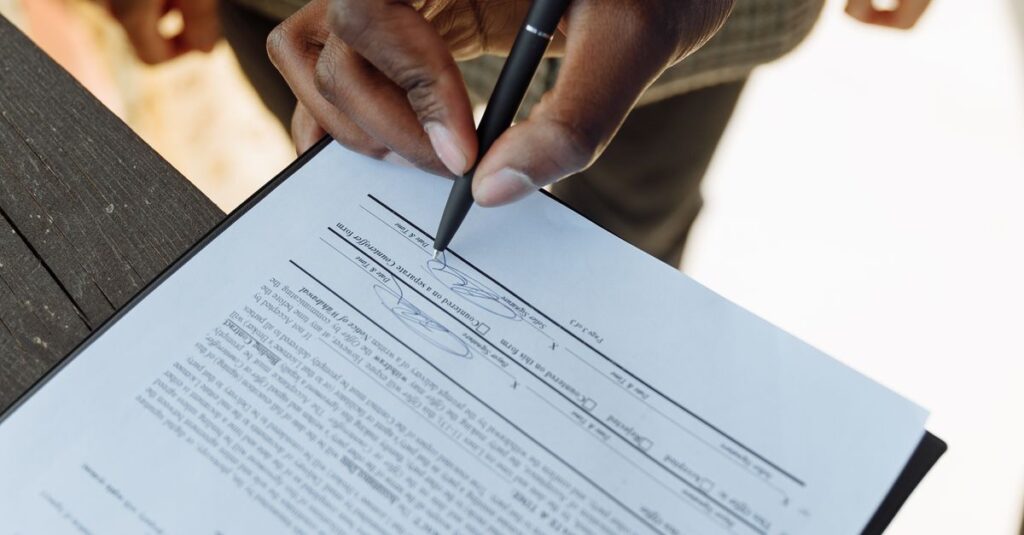
A breach of contract in the Philippines occurs when a party fails to perform an obligation required under a valid agreement or performs it in a manner contrary to the contract's terms.
Whether the contract involves a business transaction, property sale, construction project, loan agreement, service contract, or commercial arrangement, Philippine law provides remedies to protect the injured party.
If you are dealing with a breach of contract in the Philippines, understanding your legal rights is critical because you may be entitled to damages, rescission, specific performance, attorney’s fees, and other remedies under the Civil Code.
What is a Breach of Contract in the Philippines?
A breach of contract occurs when one party fails to perform what it promised under a valid agreement.
The Supreme Court explained that contractual liability arises when a party fails to comply with obligations imposed by contract, thereby causing injury to the other contracting party.
In St. Luke’s College of Medicine-William H. Quasha Memorial Foundation, Inc. v. Perez,G.R. No. 222740. September 28, 2016, the Court emphasized that breach of contract creates a legal duty to compensate the injured party for losses resulting from non-performance.
Examples include:
- Failure to pay a loan;
- Failure to deliver goods;
- Failure to complete construction work;
- Violation of a service agreement;
- Refusal to transfer property after payment;
- Failure to comply with contractual deadlines.
Elements of a Breach of Contract Claim in the Philippines
To succeed in a breach of contract case, the claimant typically must establish the following:
1. Existence of a Valid Contract
The first requirement is proof of a valid and enforceable agreement.
Contracts may be:
- Written contracts;
- Oral contracts;
- Electronic agreements;
- Contracts evidenced through correspondence and conduct.
However, written agreements are generally easier to prove in court.
2. Performance or Readiness to Perform
In reciprocal obligations, the claimant must generally show that he or she performed their obligations or was ready and willing to perform.
3. Failure of the Other Party to Comply
The claimant must establish that the defendant failed to comply with contractual obligations.
Examples include:
- Non-payment;
- Delayed payment;
- Defective performance;
- Abandonment of work;
- Failure to deliver promised goods or services.
4. Damages or Injury
The claimant should demonstrate the losses caused by the breach, although certain remedies may still be available even where damages are difficult to quantify.
In Guanio v. Makati Shangri-La Hotel and Resort, Inc., G.R. No. 190601, February 07, 2011, the Supreme Court reiterated that proof of a valid contract and non-compliance creates a prima facie right to relief.
Remedies for Breach of Contract in the Philippines
When a breach occurs, Philippine law provides several remedies.
Damages
The most common remedy is an action for damages.
The purpose is to place the injured party in the position they would have occupied had the contract been properly performed.
The law protects:
- Expectation interest;
- Reliance interest;
- Restitution interest.
These principles were discussed extensively in St. Luke’s College of Medicine v. Perez.
Specific Performance
Instead of seeking damages alone, an injured party may ask the court to compel the breaching party to perform contractual obligations.
Specific performance is common in:
- Property sales;
- Commercial agreements;
- Share transfer disputes;
- Business contracts.
Rescission or Resolution Under Article 1191
Article 1191 of the Civil Code allows the injured party to choose between:
- Fulfillment of the obligation; or
- Rescission of the contract.
In either case, damages may also be recovered.
However, rescission is not available for every breach.
In Nolasco v. Cuerpo, G.R. No. 210215, December 09, 2015, the Supreme Court held that rescission requires a substantial and fundamental breach that defeats the purpose of the agreement.
A minor or technical breach is generally insufficient.
Can You Cancel a Contract After a Breach?
Many clients ask whether they can immediately terminate a contract after the other party breaches it.
The answer depends on:
- The nature of the breach;
- The contract terms;
- Whether the breach is substantial;
- Whether the contract contains a cancellation clause.
Philippine courts generally require substantial violations before rescission may be granted.
In Casiño, Jr. v. Court of Appeals, G.R. No. 128820, February 16, 2005, the Court explained that although a party may act as though the contract has been rescinded, judicial review ultimately determines whether rescission was proper.
Damages Recoverable in a Breach of Contract Case
Actual or Compensatory Damages
These compensate for proven financial losses directly caused by the breach.
Examples include:
- Lost profits;
- Additional project costs;
- Expenses incurred due to non-performance;
- Costs of replacement services.
Temperate Damages
When actual losses clearly exist but cannot be established with mathematical certainty, courts may award temperate damages.
In Bongcayao v. Confederation of Coconut Farmers Organizations of the Philippines (CONFED), G.R. No. 212647, April 21, 2021, the Supreme Court recognized the propriety of temperate damages where actual loss was evident but difficult to quantify.
Moral Damages
Moral damages are not automatically recoverable in a breach of contract case.
As a general rule, they may be awarded only when the breach was attended by:
- Fraud;
- Bad faith;
- Malice;
- Oppressive conduct.
Exemplary Damages
Article 2232 of the Civil Code allows exemplary damages when the defendant acted in a wanton, fraudulent, reckless, oppressive, or malevolent manner.
These damages serve as an example or deterrent and are not awarded as a matter of right.
Common Defenses in Breach of Contract Cases
A defendant may raise several defenses, including:
Fortuitous Event
A party may avoid liability when performance became impossible due to a genuine fortuitous event.
Lack of Breach
The defendant may argue that no contractual obligation was violated.
Prior Breach by the Other Party
In reciprocal obligations, the issue of who first breached the contract often becomes decisive.
Absence of Damages
The defendant may challenge the existence or amount of damages claimed.
Demand Letter for Breach of Contract
Before filing a lawsuit, it is generally advisable to send a written demand letter.
A demand letter should:
- Identify the contract;
- Describe the breach;
- Specify the relief demanded;
- Set a deadline for compliance;
- Warn of possible legal action.
A properly drafted demand letter often results in settlement and may strengthen a future court case.
How to Sue for Breach of Contract in the Philippines
If negotiations fail, the injured party may file an appropriate civil action.
The process generally involves:
- Reviewing the contract;
- Gathering documentary evidence;
- Computing damages;
- Sending a formal demand;
- Filing the appropriate complaint in court.
The appropriate strategy depends on whether the goal is:
- Payment of money;
- Enforcement of obligations;
- Contract rescission;
- Recovery of damages.
Frequently Asked Questions (FAQs)
What is the penalty for breach of contract in the Philippines?
There is generally no automatic penalty. Liability depends on the damages proven, contractual stipulations, and applicable law.
Can I sue for breach of contract in the Philippines?
Yes. A party injured by a breach may file a civil action for damages, specific performance, rescission, or other remedies.
Can I rescind a contract because of a breach?
Possibly. Article 1191 allows rescission for substantial breaches of reciprocal obligations.
Is a demand letter required?
While not always legally required, sending a demand letter is strongly recommended and is often critical from both a practical and evidentiary standpoint.
Lastly,
A breach of contract in the Philippines can expose the defaulting party to damages, rescission, specific performance, attorney’s fees, and other legal consequences. Whether you are enforcing a commercial agreement, construction contract, loan agreement, property sale, or service contract, understanding the available remedies is essential to protecting your rights.
If you believe you are dealing with a breach of contract in the Philippines, early legal assessment can significantly improve your chances of recovery and help determine whether negotiation, demand, rescission, or litigation is the most effective course of action.
Related Readings:
This article was drafted by Romualdez Law Offices, a Philippine-based law firm known for delivering strategic, results-driven legal solutions. The firm provides in-depth legal insights across civil, corporate, and property law, with a focus on clarity, precision, and practical application for both individuals and businesses.
Schedule a Consultation
Location
Soho 207 Mckinley Park Residences, 3rd ave. cor. 31st St., BGC, Taguig, Philippines, 1635
Email: executive@romualdezlaw.com
Contact Number: +63 952 489 1738